Molecular Modeling of Battery Electrolytes
Understanding how solvation structure, ion transport, and electrolyte stability emerge from molecular interactions.
DFT · Molecular dynamics · Ion transport
Explore battery electrolytesI study molecular behavior in batteries through simulation, automated reaction discovery, and machine-learning potentials.
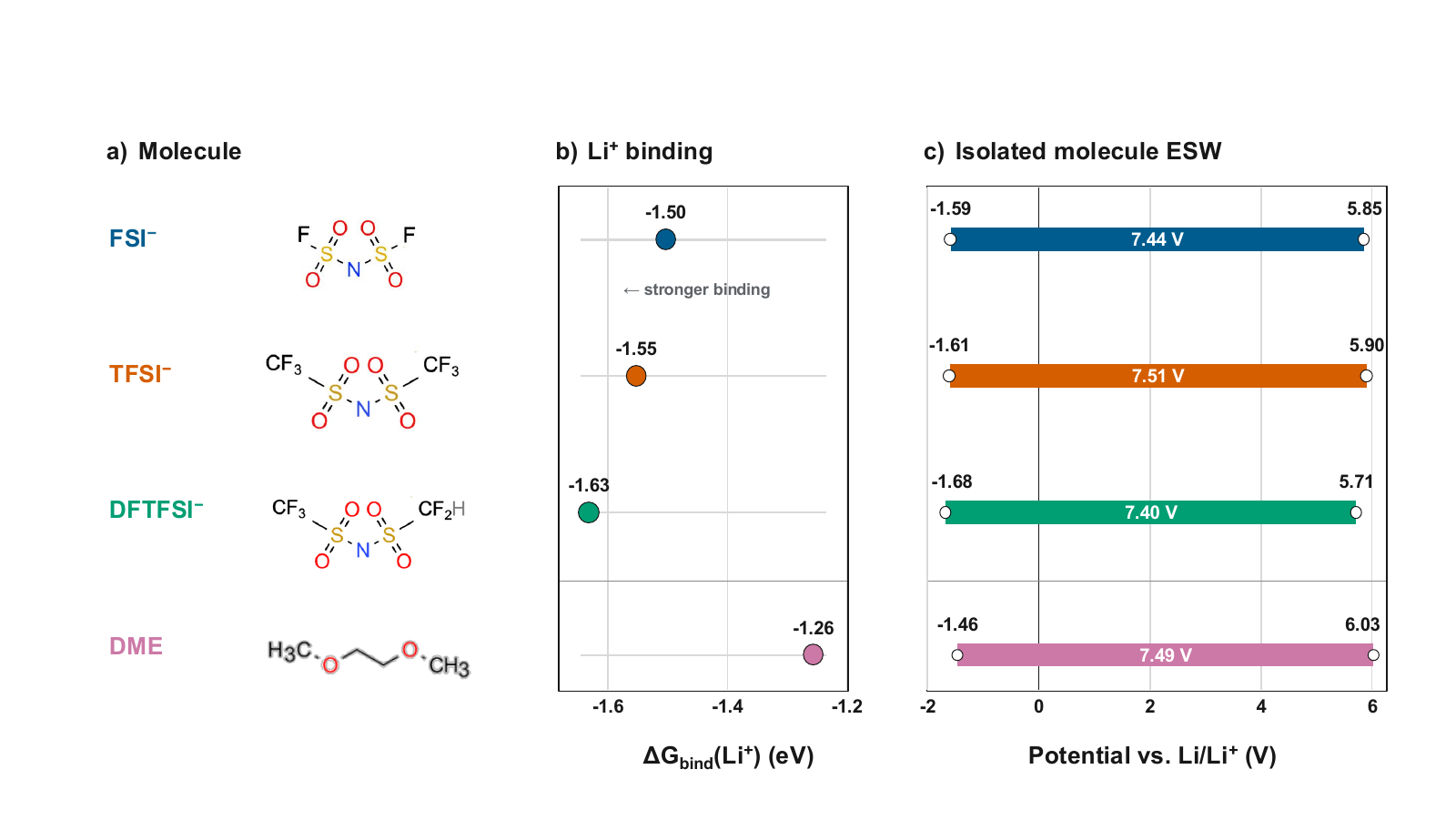
Understanding how solvation structure, ion transport, and electrolyte stability emerge from molecular interactions.
DFT · Molecular dynamics · Ion transport
Explore battery electrolytesExploring decomposition pathways and connecting individual reaction events into interpretable networks.
EnsembleMTD · Enhanced sampling · Reaction networks
Explore reaction discoveryConnecting reference electronic-structure calculations with machine-learning potentials for atomistic simulations.
MACE · DFT datasets · Atomistic simulation
Explore ml force fieldsJournal publications, manuscripts, conference contributions, and collaborations with experimental researchers.
Publications · Manuscripts · Collaboration
Explore scientific contributions2025 · Published
Design of Fluorine-Free Weakly Coordinating Electrolyte Solvents with Enhanced Oxidative Stability
Angewandte Chemie International Edition 64, e202506826
Co-author · DFT and molecular-dynamics simulations and analysis
Read the paper2026 · Published
Angewandte Chemie International Edition 65, e3797296
Co-first author · Dominik Weintz and Adil Aboobacker contributed equally
Read the paperMy computational contributions include DFT and molecular-dynamics simulations, analysis, validation, and scientific writing. Ongoing work is marked separately from published articles.