UtiliQ
Energy systems · Software engineeringI co-develop an early-stage energy-optimization concept, turning customer discovery into an MVP for industrial test-bench scheduling.
Explore UtiliQAI engineer & applied researcher
I build AI systems for energy and enterprise applications, drawing on a research background in computational chemistry and batteries.
Explore my work
Models, systems, and the decisions they support.
I co-develop an early-stage energy-optimization concept, turning customer discovery into an MVP for industrial test-bench scheduling.
Explore UtiliQ
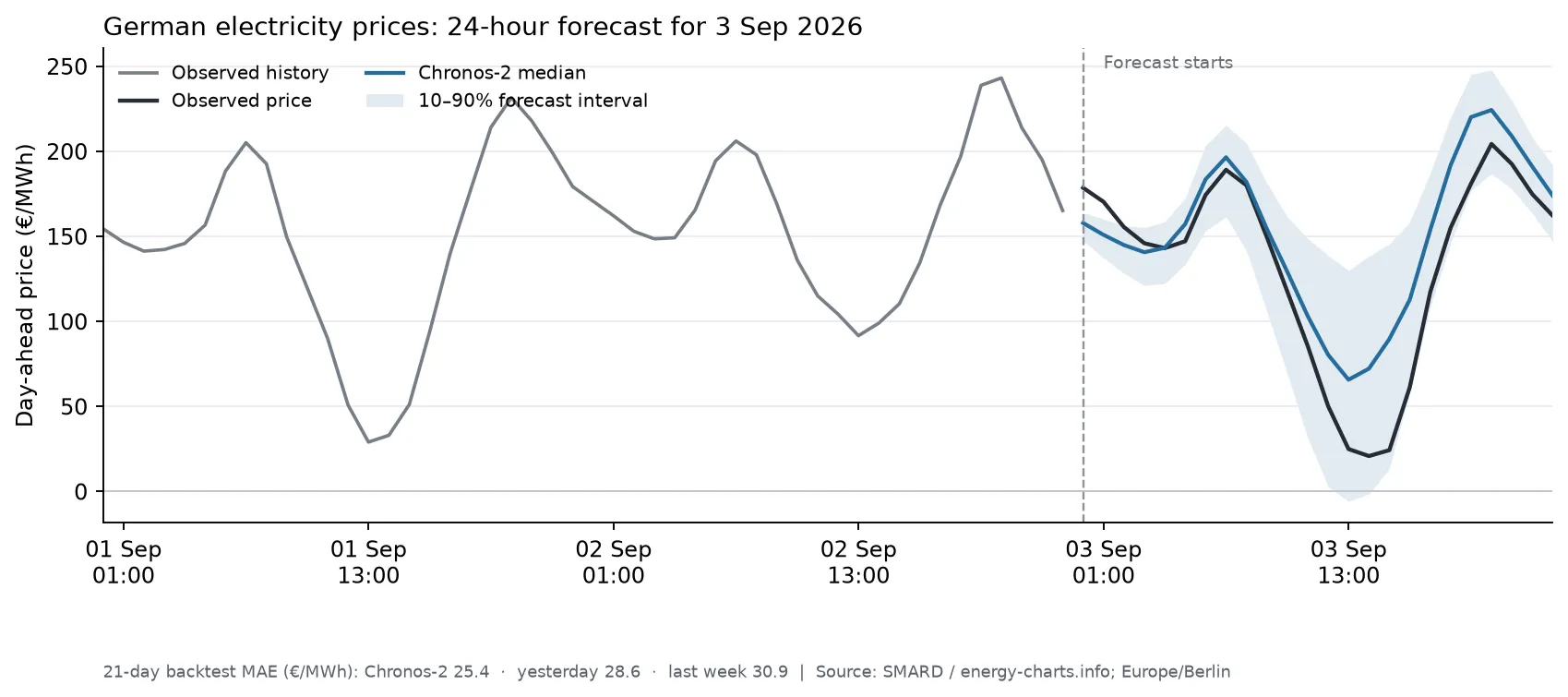
21-day public-price backtest · 504 forecast hours
I built a zero-shot electricity-price backtest: 21 forecast days, 504 hourly predictions, and two simple baselines.
Price data: Bundesnetzagentur | SMARD.de · CC BY 4.0, via Energy-Charts.
Explore Chronos-2
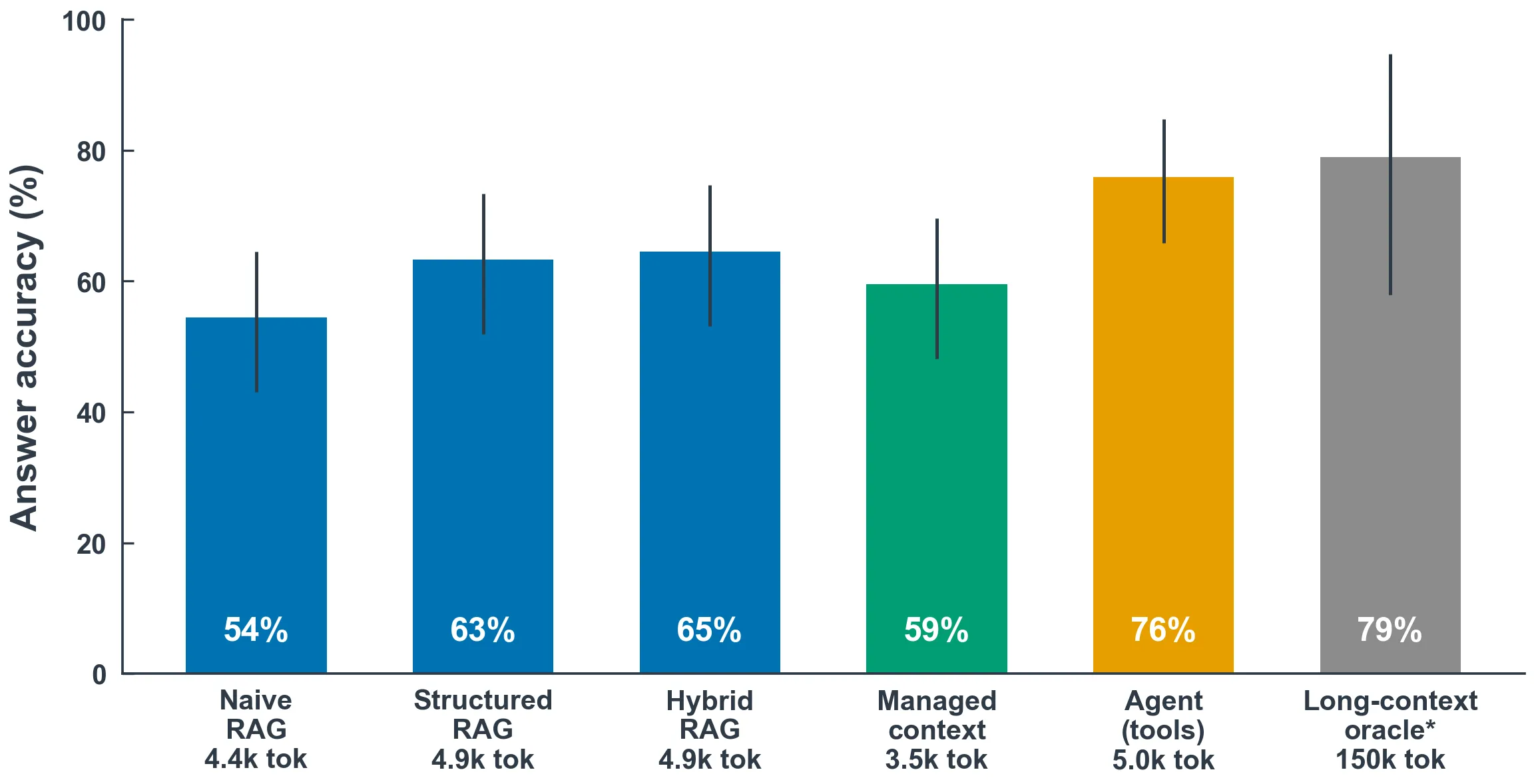
FinanceBench study · 79 questions; oracle subset n=19
I compared parsing, retrieval, context management, and tool use on FinanceBench, measuring answer quality separately from evidence retrieval.
Explore Enterprise AI

Actual app screens · Local tests with a synthetic listing
I’m building a bilingual marketplace for student residences, from joining and listing an item to private contact and sold-item management.
Explore FleameAn answer is only as useful as the evidence behind it. Change the retrieval strategy and see what makes it into the answer.
Independent demonstration · Synthetic documents · Precomputed answers
Charging window
Charging is permitted between 02:00 and 05:00. Scheduled charging must also comply with the reserve and temperature limits in the safety addendum.
Operating limits
Keep the battery reserve above 20%. Charging is allowed only when the cell temperature is between 10°C and 35°C. If a limit would be breached, postpone charging.
Charging is permitted between 02:00 and 05:00, with the reserve kept above 20% and the cell temperature between 10°C and 35°C. Postpone charging if a safety limit would be breached.
Sources: Operations guide, Safety addendum
Combining the time window with the safety addendum supports an answer with all stated conditions.
These three fictional documents were written for this portfolio. Each strategy selects a curated set of passages and an authored answer. This demonstrates evidence coverage; it does not run a search model or measure the performance of a retrieval method.
Charging is permitted between 02:00 and 05:00. Scheduled charging must also comply with the reserve and temperature limits in the safety addendum.
Keep the battery reserve above 20%. Charging is allowed only when the cell temperature is between 10°C and 35°C. If a limit would be breached, postpone charging.
An off-peak price signal is an economic preference, not permission to operate. A low price does not override the charging window, reserve requirement, or temperature limits.
This is a software illustration, not operational battery guidance.
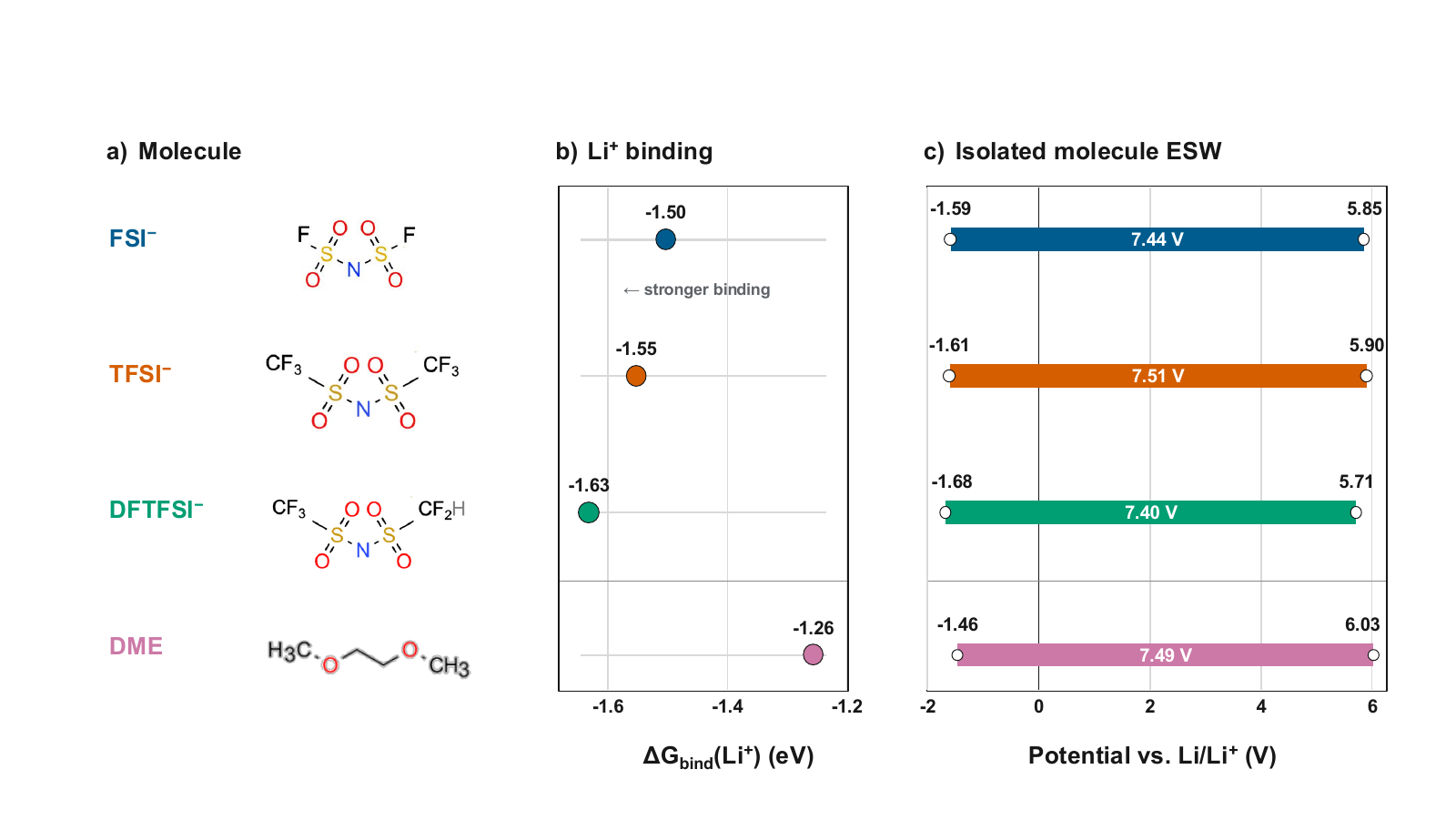
I study how molecular structure shapes transport and reactions in battery electrolytes. My work spans DFT, molecular dynamics, machine-learning potentials, and automated pathway discovery.
Explore my research
DFT · Molecular dynamics · Ion transport
Read about this areaEnsembleMTD · Enhanced sampling · Reaction networks
Read about this areaMACE · DFT datasets · Atomistic simulation
Read about this areaPublications · Manuscripts · Collaboration
Read about this areaAI engineering
Applied research
Computational chemistry
I work across the boundary between a model and the system that makes it useful.
I’m a chemistry PhD researcher at the University of Münster and Helmholtz Institute Münster. I build Python analysis workflows and simulation tools, and apply that background to energy systems, enterprise AI, and full-stack products.
My research includes two Angewandte Chemie publications, an open-source reaction-discovery workflow, and ongoing work on machine-learning force fields.
AI engineering, applied research, and the space between.
adilpsnde@gmail.com